UK Gambling Commission Proposes Three Options for Operating Licence Fee Increases
UK Gambling Commission Proposes Three Options for Operating Licence Fee Increases

The Announcement and Its Core Purpose
The UK Gambling Commission, via GOV.UK, recently laid out proposals for adjusting its operating licence fees, presenting three distinct options designed to enhance cost recovery while channeling resources toward key regulatory priorities; these measures stem directly from the Commission's own operational data, which highlights evolving demands in oversight and compliance across the gambling sector.
Operators holding licences—from traditional casinos to remote online platforms—stand to feel these shifts, as the changes target a broad spectrum of activities, ensuring that fees align more closely with the regulatory workload they generate; what's interesting here is how the proposals build on established fee structures, refining bands to reflect real-world usage patterns rather than imposing blanket hikes.
And while the full details unfold in accompanying annexes, early indicators show targeted adjustments for sectors like remote casino gaming, where fee bands could see recalibrations based on gross gambling yield thresholds and operational scales.
Breaking Down the Three Fee Increase Options
Option one offers a measured approach, pegging increases to inflation plus a modest percentage to cover rising compliance costs, allowing operators to anticipate changes with some predictability; option two ramps it up, incorporating a sharper uplift tied to specific priority areas like consumer protection and anti-money laundering efforts, which data from the Commission reveals have surged in recent years.
Then there's option three, the most assertive, blending inflation adjustments with performance-based elements that reward operators demonstrating strong compliance records—although all would contribute more overall; researchers who've pored over similar regulatory tweaks note that such tiered choices give stakeholders a voice in shaping the final path forward.
Take remote casino operators, for example: under these scenarios, those in higher fee bands—say, generating over £25 million in gross gambling yield—might face uplifts of 10-20%, according to the detailed annexes, while smaller players in lower bands see proportionally lighter touches; this structure, informed by operational metrics, aims to distribute the burden equitably, preventing smaller outfits from bearing undue strain.
How These Changes Ripple Across Licensed Operators
Casinos, both land-based and online, form a prime focus, since their licences encompass diverse activities from slots to table games, each carrying distinct regulatory oversight needs; data indicates that remote sectors, booming with digital adoption, now demand more Commission resources for monitoring fairness and player safeguards, prompting these fee recalibrations.
But here's the thing: non-remote operators, including bingo halls and betting shops, aren't sidelined either, as the proposals encompass all licence types, from personal management to substantial non-commercial prizes; observers point out that fee bands, segmented by factors like premises numbers or device counts for remote setups, will adjust to match these realities, potentially hiking annual costs by varying degrees depending on the chosen option.
Figures from the consultation reveal, for instance, that a mid-tier remote casino operator could see fees climb from current levels—around £10,000-£50,000 annually—toward £12,000-£65,000 under option two, with annexes providing granular breakdowns; that's where the rubber meets the road for businesses planning budgets amid tighter margins.
Timeline: Consultation to Potential Implementation
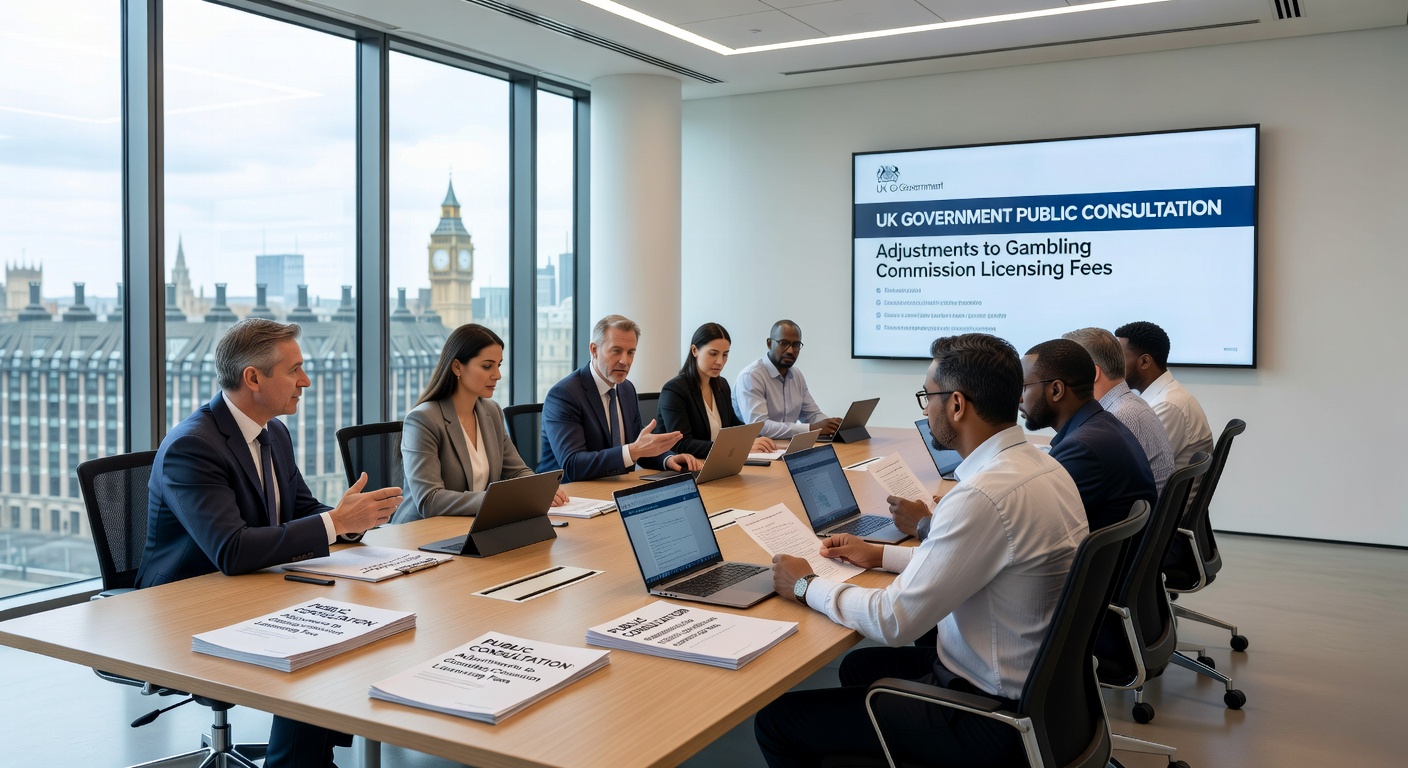
The consultation process kicked off with the GOV.UK publication, inviting feedback from industry players, trade bodies, and consumer groups until a set deadline—likely extending into early 2026—after which the Commission will analyze responses before finalizing decisions; if greenlit, these fee structures roll out from 1 October 2026, giving operators ample lead time to adapt financials.
Now, March 2026 emerges as a pivotal checkpoint, when preliminary outcomes from the consultation could surface, allowing the Commission to refine proposals based on gathered input; experts who've tracked past consultations, like those on stake limits, observe that such phases often lead to hybrid options blending the three originals.
Operators, meanwhile, prepare by reviewing their current fee bands—detailed in the annexes—and modeling impacts across scenarios, since transitional arrangements might ease the shift for ongoing licences.
Fee Band Specifics: A Closer Look at Adjustments
Annexes spell out the nitty-gritty, with remote casino gaming fees stratified into bands from A (under £550k yield) to F (over £1 billion), each facing proportional increases under the options; band C operators, handling £5.5m-£25m yields, for instance, could transition from roughly £20,000 fees to £24,000-£28,000, reflecting heightened scrutiny on digital vulnerabilities.
Semicolons separate these from non-remote casino bands, where venue-specific fees—based on table and machine counts—might rise similarly, although at lower absolute levels; data shows remote activities now dominate Commission workloads, justifying the emphasis, while lotteries and external bets follow suit with their own tailored uplifts.
One case that stands out involves multi-activity operators holding combined licences; they benefit from aggregated band calculations, yet still navigate compounded effects, as studies of prior fee reviews confirm.
Rationale Rooted in Operational Realities
Behind these proposals lies a wealth of Gambling Commission data tracking enforcement hours, compliance checks, and emerging risks like problem gambling trends; since the 2014 Gambling Act updates, regulatory demands have ballooned—think enhanced due diligence under the 2023 affordability checks—straining fee recovery, which currently covers only about 95% of costs.
So the Commission seeks full cost recovery, redirecting surpluses to frontline priorities such as licensing efficiency and player protection innovations; those who've analyzed the operational datasets note spikes in remote oversight, where machine learning aids in detecting irregularities, demanding ongoing investments.
It's noteworthy that the three options accommodate this without overhauling the entire framework, preserving incentives for good behaviour—like discounted fees for impeccable records—while the ball's in operators' court during consultation.
Industry Reactions and Broader Context
Trade associations, upon release, urged balanced implementation, highlighting how fee stability aids investment in safer gambling tools; yet data from analogous jurisdictions, such as Australia's state-level adjustments, suggests operators adapt swiftly when tied to transparent regulatory gains.
And for online casinos, particularly those blending sports and slots, the remote band tweaks hit close to home, potentially influencing marketing spends or tech upgrades; people in the sector often discover that proactive engagement in consultations sways outcomes, as seen in previous licence condition tweaks.
Turns out, with digital migration accelerating—remote gross gambling yield up 15% year-on-year per Commission stats—these fees underscore a maturing market prioritizing sustainability over unchecked growth.
Conclusion
These proposed fee changes represent a calculated pivot by the UK Gambling Commission, leveraging operational insights to fund essential oversight amid a dynamic industry landscape; with three options on offer, from conservative to robust, and a clear path to 1 October 2026 implementation post-consultation—including key reviews around March 2026—operators across casinos and beyond have tools to assess and respond.
The annexes provide the roadmap, fee bands adjust to reflect true burdens, and the focus stays on cost recovery fueling priorities like consumer safety; ultimately, stakeholders' input during the open period will shape the final form, ensuring the framework evolves with the sector it regulates.