Enhancing Player Interactions: Widget Placement Techniques on Betting Platforms

Betting platforms rely on interface elements known as widgets to deliver real-time data and actions without forcing users through multiple pages, and their positioning directly influences how quickly participants locate odds, place wagers, and manage accounts. Researchers tracking digital wagering environments have documented that widgets positioned near primary navigation paths reduce click counts by measurable margins, while those buried deeper in layouts correlate with higher abandonment rates during live events.
Core Widget Categories and Their Typical Roles
Live odds panels update continuously during matches or races, account balance displays reflect deposits and payouts instantly, and promotional banners highlight bonuses or free bets. These components appear across desktop and mobile versions of major sites, yet the sequence in which users encounter them varies widely. Observers note that platforms arranging live odds in the upper-left quadrant alongside a persistent bet-slip widget on the right side see sustained session lengths compared with configurations that scatter the same tools across separate tabs.
Data from industry monitoring groups shows that bet-slip widgets placed within the first scroll of the homepage capture a larger share of spontaneous wagers, particularly during high-profile fixtures. In contrast, when the same widget loads only after users navigate to an event page, conversion drops because participants often exit before completing the extra steps. Those who've studied interface heatmaps across multiple operators report consistent patterns where eye-tracking follows a left-to-right, top-to-bottom flow, making early placement of high-value actions more effective than footer or sidebar locations.
Evidence from Mid-2026 Industry Analysis
Figures released in June 2026 by the American Gaming Association revealed that operators who reorganized widget clusters around core betting actions recorded average engagement increases of 18 percent over six-month periods. The report examined anonymized session data from several regulated markets and found that users completed deposits 12 percent faster when balance and deposit widgets appeared adjacent to the main menu rather than inside account subpages. European Gaming and Betting Association analysts have corroborated similar trends in multi-jurisdiction comparisons, noting that mobile-first redesigns incorporating swipe-accessible widgets produced retention gains without requiring additional marketing spend.
Implementation Patterns Observed Across Markets
North American operators have adopted persistent floating bet-slips that remain visible during scroll, while Australian platforms often embed live-chat widgets directly beneath scoreboards to handle queries without interrupting the betting flow. Canadian provincial sites have tested A/B placements of promotional widgets, discovering that positioning seasonal offers immediately below featured events lifts click-through rates more reliably than rotating carousels placed higher on the page. These adjustments require coordination between design teams and compliance departments to ensure regulatory disclosures remain visible at every stage.
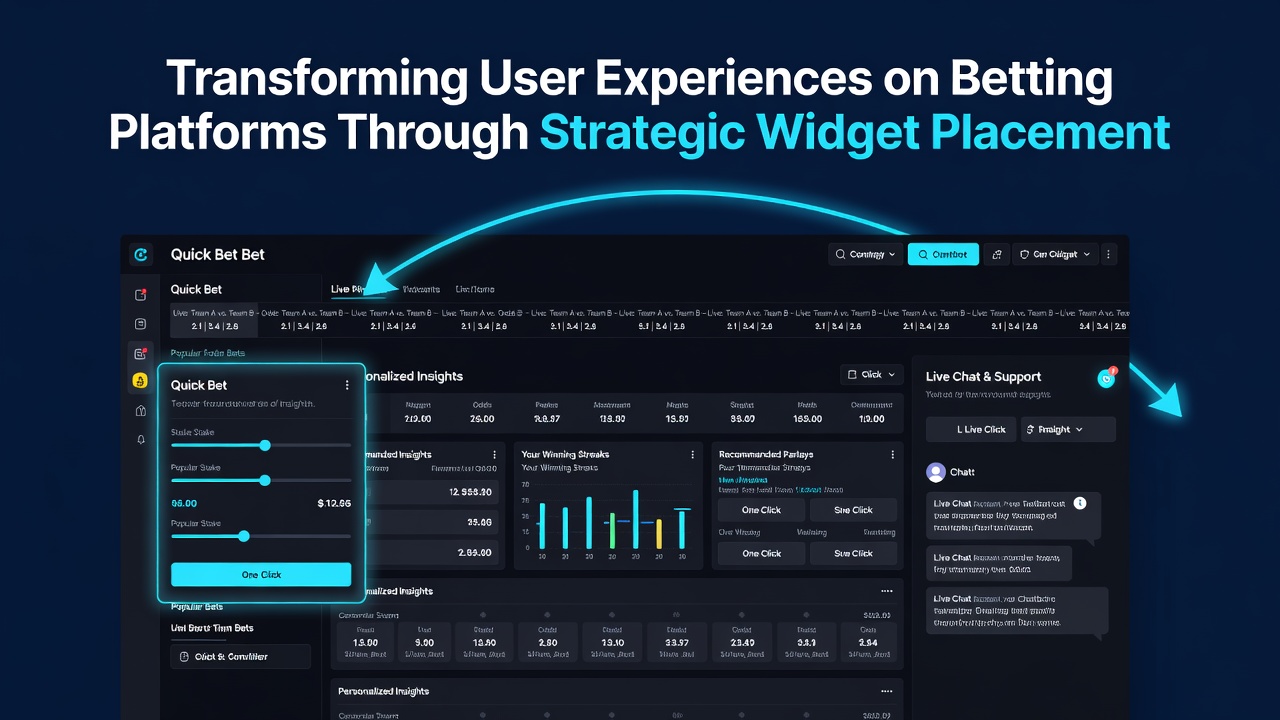
One documented case involved a European operator that shifted its loyalty-points tracker from a secondary menu to a compact header widget. Session recordings indicated users checked their status three times more frequently after the change, and subsequent surveys showed improved perception of reward transparency. Another example from an Asian-facing platform demonstrated that embedding a currency-conversion widget next to stake fields reduced support tickets related to unfamiliar odds formats by nearly one-third within the first quarter of deployment.
Technical Considerations During Rollout
Developers must balance widget density against page-load performance because excessive simultaneous elements can slow rendering on older devices. Content-management systems used by betting operators typically allow conditional display rules so widgets appear only to verified users or during specific event windows. Accessibility guidelines require sufficient color contrast and keyboard navigation support for these components, ensuring compliance teams review placements before public release. Testing protocols include both automated scripts and moderated user sessions to identify friction points that static analytics might miss.
Platform teams also monitor regional preferences; users in markets with strict deposit limits often benefit from visible responsible-gambling widgets placed near funding options, whereas high-volume bettors respond better to quick-stake presets located inside the bet-slip itself. Adjustments remain iterative because traffic patterns shift with new device releases and changes in event scheduling.
Conclusion
Strategic widget placement continues to serve as a measurable lever for improving navigation efficiency and task completion on betting platforms. Industry reports and operator case studies demonstrate that aligning high-frequency actions with natural eye-flow patterns and device constraints produces consistent gains in engagement metrics. As platforms incorporate fresh data sets and refine testing methodologies, widget positioning will remain a core element of interface optimization across regulated wagering environments.